Why 95% of Crypto Traders Lose Money (And What Works Instead)
95% of crypto leverage traders lose money and 78% get wiped out in 6 months. MEXC says so itself. Here's the data, the stories, and why LP farming on MaxFi pays consistently.
Chapters
- 0:00Are You Day Trading or LP Farming?
- 0:47Why I Stopped Day Trading
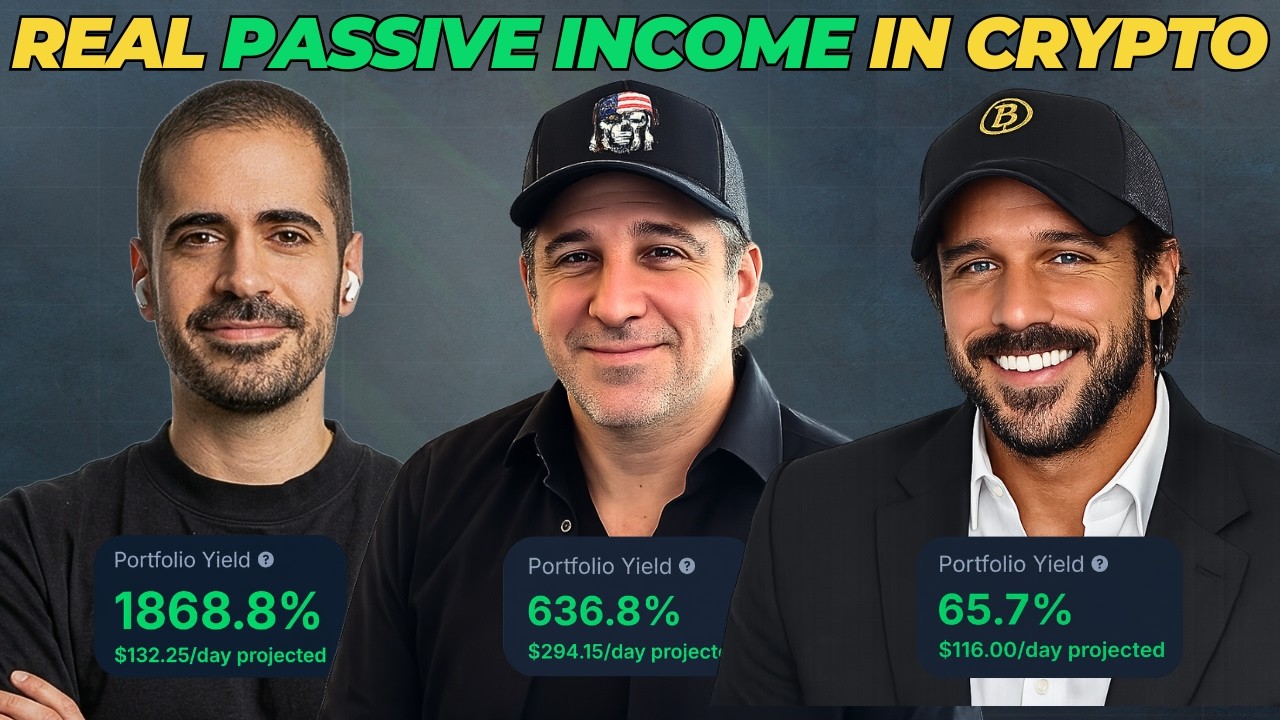
- 1:50My MaxFi Portfolio: $128/Day for 54 Days
- 3:30The Data: 95% of Leverage Traders Lose
- 5:05Even Stanley Druckenmiller Lost $600M
- 7:43The James Wynn Story: $100M to Zero
- 11:30Why LP Farming on MaxFi Wins
- 12:50Blue Chip Plus Degen Strategy
- 14:00My Actual Trading Records: $150 for a Week of Pain
- 16:45The Short Window Before Institutions Arrive
- 18:20Compounding Strategy Explained
- 19:35Action Plan: Stop Trading, Start Farming
Key Takeaways
- ✓95% of crypto leverage traders lose money — published by MEXC, a major exchange that profits from the volume
- ✓78% of margin traders lose their entire initial capital within 6 months
- ✓Stanley Druckenmiller, one of the best traders alive, lost $600M on a $200M short in 3 weeks
- ✓James Wynn went from $100M profit to $17.5M loss in weeks, with no prior derivatives experience
- ✓A $17K MaxFi portfolio earns $128/day ($4,000/month) consistently regardless of market direction
- ✓Zero-swap rebalancing unlocks 1% fee pools that traditional LPs cannot profitably enter
- ✓2-4 year window before institutions (Jane Street, Goldman Sachs) enter and compress LP yields
Are You Day Trading or LP Farming?
A lot of people see my hyperliquid account and ask if I am day trading on top of the LP farming I do on MaxFi and Snuggle. The answer is no. That account has $700 in it because I pulled most of it out. I used to day trade actively on hyperliquid and MEXC. I stopped for one simple reason: I was not making money consistently.
This video is about the data. If you are still leverage trading or day trading crypto, the numbers are against you. Hard.
The Statistics Nobody Wants to Tell You
MEXC, a major crypto exchange, published an article on the dark side of leverage trading. Their own data shows:
- 95% of crypto margin traders lose money over time (Cambridge Centre for Alternative Finance, 2023)
- 78% lose their entire initial capital within 6 months
- Average account lifespan for a 10x leverage trader: 37 days
- $52 billion in leverage positions liquidated in 2023 alone (2024 and 2025 numbers are much higher, likely over $100B)
- 40-60% of all open positions get liquidated during high volatility events
These are not doomer numbers from skeptics. These come from the exchange that makes money on the volume. MEXC is essentially saying: you will lose. They published this because they want educated users, and because the data is undeniable.
The average 10x trader lasts 37 days. Think about that. One unexpected move and the account is gone.
Even the Best Traders Alive Lose Big
If you think you can beat these odds, consider Stanley Druckenmiller. One of the best traders in modern history. Winning years for over three decades straight.
In March 1999, he shorted $200 million of internet stocks. He was right about his thesis: most of those companies eventually went bankrupt. But his timing was off. In three weeks, he covered at a $600 million loss. Every single one of those stocks eventually went to zero. He was right about the destination. The market stayed irrational longer than his capital could survive.
If Druckenmiller, with decades of experience and institutional resources, can lose $600M on a thesis that was ultimately correct, what are the odds for a retail trader with a Discord signal service and 10x leverage?
James Wynn: $100M to Zero in a Month
James Wynn got famous for making $100M on hyperliquid. He called Pepe at $600K valuation. He held the largest BTC long position ever recorded at $1.26B.
Then he lost it all.
From $100M profit to $17.5M loss in a matter of weeks. He admitted in his own tweets that he started trading perpetual futures in March with "no experience with derivatives." He had only traded meme coins before. Got lucky once at massive scale, then lost control.
Now he is posting affiliate links for trading platforms to scrape referral income. Selling trading courses. Still calling the market wrong. The followers keep paying because they think he knows something. He doesn't. He got lucky. Luck ran out.
This is the pattern. The "successful" traders you follow on X probably got lucky once, and the algorithm rewards their content while their account slowly bleeds out. By the time you realize they do not know what they are doing, you have already copied their trades.
What $128/Day Looks Like
Here is my LP portfolio on MaxFi. About $17,000 in total value across multiple positions. Daily earnings: around $128/day. That is $4,000 per month in passive income from DEX trading fees.
It has been running for 54 days. Same $128/day every day, compounding quietly. Come back in 120 days. Come back in 180 days. The numbers will speak for themselves.
This is not glorious. It is not revenge trading. There are days I do not even check it. I sleep well because nothing is on margin. No liquidation risk. No stop losses getting hunted. Just DEX fees accumulating in a pool while the rest of the market drama plays out.
The Real Trading Record: $150 Profit for a Week of Stress
I pulled up my actual trading records because I wanted to be honest about what trading looked like for me.
Winning trades:
- $196 on Linea
- $109 on Silver
- $70 on INIT
- $32 on Linea (second entry)
Total wins: roughly $400.
Losing trades:
- $143 on OM
- $50 on Copper (yes, really)
- Lost money on Silver after previously winning on it
- Several other small losses
Net result after a full week of screen time: about $150 profit. And that is considered a good week. I was better than 78% of traders at this exchange, I did not use crazy leverage (4-5x), I used tight stops. Still barely scraped a $150 gain.
In the same 54-day period my LP portfolio generated over $7,000. No screen time. No stress. No stops to manage. Just positions earning fees in the background.
Who wins in 6 months? In a year? In 2 years? The answer is obvious once you stop staring at charts.
Why LP Farming on MaxFi Works
Liquidity farming is how real market makers earn. Goldman Sachs does not care if BTC goes up or down. They earn the spread on trades regardless. Jane Street is the same. They make billions by providing liquidity, not by predicting direction.
That same business model is available to retail users today, through automated LP protocols. MaxFi is one of them, and it has a specific technical edge: zero-swap rebalancing.
Traditional LP management charges 0.5-1% per rebalance in swap fees, slippage, and MEV extraction. That overhead makes tight-range high-fee pools unprofitable. After 20-50 rebalances, your position is worth less than you deposited.
MaxFi uses Snuggle technology to rebalance without swaps. No swap fees. No slippage. No MEV. That unlocks an entire tier of pools that nobody else can profitably enter. Tight 1% fee pools that capture real volume. High-APR pools where other platforms bleed out from rebalance costs.
The result: MaxFi positions earn fees that simply are not accessible elsewhere.
Blue Chip Plus Degen Strategy
The portfolio approach I recommend:
70-80% blue chip: BTC/USDC, ETH/USDC, ADA/BTC, ETH/SOL pairs. These hold value during downturns, earn 20-200% APR, and compound reliably. The core of generational wealth.
20-30% degen: Meme tokens, newer projects, small-cap pairs. These earn 1,000-4,000%+ APR but have higher impermanent loss risk. The dopamine rush some traders chase, except you still earn fees instead of getting liquidated.
For the degen portion, the mindset shift is critical: think 365 days, not 30 days. A $150 position that drops to $50 but earns $170 in fees is still profitable. After earning back your principal, every day forward is pure profit. You cannot lose more than your deposit. You can keep earning for months.
Compounding Strategy
On positions where I believe the underlying asset is undervalued (BTC, ETH currently), I enable partial compounding. 50% of earned fees reinvest into the position, 50% get sent to my wallet.
Why partial? Because when BTC and ETH are at these levels, compounding more of those assets at today's prices is a gift to future me. When prices run up, I can switch to 0% compounding and take all earnings to the wallet as cash flow.
This is a strategy. You cannot do this with leverage trading. You cannot compound a position you just got liquidated on.
The Short Window Before Institutions Arrive
Here is the real opportunity: retail has maybe 2-4 years before the big institutions move into DeFi LP farming at scale. Jane Street and Goldman Sachs are watching these yields. They will eventually look at the numbers and say "why aren't we earning that on our billions of ETH and BTC?"
When they come in, yields compress. The 200% APR pairs become 50%. The 1,000% degen pools become 300%. Still good, but nowhere near the generational wealth window that exists today.
You have a head start. A $10,000 portfolio today compounded at current yields becomes meaningful capital before the institutional wave hits. Waiting another year means starting from a smaller base against compressed yields.
Action Plan
Stop wasting time on hyperliquid. Stop revenge trading after a bad day. Stop paying for trading courses from people who got lucky once.
Start here:
- Sign up at maxfi.tech/deposit and connect your wallet
- Start with blue chip pairs (BTC/USDC, ETH/USDC) for steady returns that survive downturns
- Add a small degen allocation if you want higher APRs and can stomach more volatility
- Compound during downturns, take profits during run-ups
- Use the referral program to earn additional income from friends who join
- Study the strategy library in the learn section to understand impermanent loss, range selection, and compound strategies
Share this video with a trader you love. Most day traders are chasing the dopamine rush more than the money. LP farming gives you something better: a system that actually works, consistently, while you sleep.
Stay ahead of the market
Get yield updates, new pool alerts, and market insights from MaxFi.
No spam. Unsubscribe anytime.
Frequently Asked Questions
Why do 95% of crypto traders lose money?
Leverage amplifies both gains and losses, and crypto volatility is extreme. Even professional traders with decades of experience get wiped out during unexpected moves. Stop losses and risk management help but cannot save you when the market gaps against you overnight. The numbers come from Cambridge Centre for Alternative Finance research and are acknowledged by exchanges themselves, including MEXC.
What is LP farming and how is it different from day trading?
LP farming means providing liquidity to a decentralized exchange and earning trading fees every time someone swaps against your pool. You are not predicting price direction. You are earning fees regardless of which way the market moves. It is the same business model that Jane Street and Goldman Sachs use in traditional markets — market making at scale. Day trading tries to profit from short-term price moves, which has a 95% failure rate over time.
How much money do I need to start LP farming on MaxFi?
Blue chip pairs work best with at least $3,000-$5,000 to generate meaningful daily income. Smaller amounts work but the daily returns scale with capital. For higher-risk degen pools (meme tokens, newer projects), you can start with $100-$300 as a test position. The backtest simulator at maxfi.tech/backtest lets you model different capital amounts and strategies before depositing.
Why can MaxFi offer higher yields than other platforms?
MaxFi uses zero-swap rebalancing via Snuggle technology. Traditional LP rebalancers charge 0.5-1% per rebalance in swap fees, slippage, and MEV extraction. That overhead makes frequent rebalancing unprofitable on other platforms. MaxFi eliminates those costs, which means tight-range 1% fee pools become viable. Those pools capture far more trading fees than wide-range 0.3% positions.
What is the difference between blue chip and degen LP positions?
Blue chip positions are pairs like BTC/USDC, ETH/USDC, ADA/BTC. They hold value well, have lower impermanent loss risk, and earn 20-300% APR. Degen positions are meme tokens or newer projects with very high APRs (1,000%+) but also higher impermanent loss risk. Recommended split: 70-80% blue chip, 20-30% degen. The degen portion provides the high-upside action without risking the bulk of the portfolio.
Can I lose money LP farming on MaxFi?
Yes, through impermanent loss if one asset in a pair drops significantly. But unlike leverage trading where you can lose more than your deposit, the worst case for LP farming is losing a portion of the deposit while still earning fees. With high-APR positions, the fees often recover the impermanent loss within 30-60 days. After that point, every day of earnings is pure profit on top of your original capital.